Tones of Pictures, Most Commons and Mnemonics

Monday, August 13, 2007

Mnemonics

I found Tommyk's notes 2 weeks ago and I can tell that there is a lot of very useful information like this one for example.

The NBME will ask a lot of questions about serum electrolytes and DIURETICS. This is come up over and over and over again!
LISTEN, for FHA (Acronym Federal Housing Authority). (which stands for Furosemide, HCTZ, and Acetazolamide), YOU LOSE K (cash) FROM THE SERUM!!!!!!!!! (Hypokalemia results) (Think of mnemonic, if the FHA comes, you likely have no Kash!)
LISTEN, if your patient wants a H (HI)- Fidelity (F) stereo, he has to BUY IT UP (B=Bi-carbonate) (Hydrochlorothiazide and Furosemide stands for the H and F), then you must BUY IT UP! ("Buy" sounds like Bicarbonate, and BUY IT UP means the "Buy"carbonate HCO3 levels in your blood will increase!) (LINK:metabolic alkalosis)
LISTEN, all Diuretics lower Magnesium, so THINK that if you sit down to pee (diuretic), you will also have a big MASSIVE GLOB of poop. The M in Massive and the G in Glob of poop stands for Mg coming out. (hypomagnesium)
LISTEN, ALL Diuretics raise uric acid in serum, lowering it in the renal tubules. This mnemonic is easy...DIURETIC SOUNDS LIKE URIC ACID both have "UR". Say it fast. then you will connect! And Diu"r"etic has "r" for raise in serum. (This is of clincal importance as Thiazide Diuretics are used to treat uric acid stones because while serum levels stay high, renal tubule levels remain low!)
LISTEN, the acronym ASA stands for aspirin, and aspirin Overdose is acidic. So the A (Amiloride), the S (Spironolactone), and A (Acetazolamide) . An aspirin Overdose gives you metabolic acidosis!!!!!!!
Also KNOW the connection that the K sparing diuretics STAys in serum. (S=spironolactone, T-triamterene, A-amiloride) (Usually, I found it helpful to recall that H and K stay together usually...) HCO3 leaves in the urine...
LISTEN, for Calcium ions it is tougher. But this works for me. I think of a S-Ca-fFold falling down a building. (You know, for painters). So, Calcium administration makes S (Spironolactone) and F (Furosemide) "fall" out of your urine! See the Ca in word S-Ca-Ffold!!!! (This is clincially important because LASIX or furosemide is given to CHF patients every second which predisposes them to Ca stones in kidney!
REPEAT THIS HIGH YIELD CONCEPTs UNTIL IT STICKS!!!!!! BEcause you will likely be asked this on your test because of the relation to renal stones....Ca for e.g. causes stones. Hypokalemia, Hyperacidosis...And this is SO IMPORTANT, you must repeat my mnemnoics over and over. They worked for a lot of people! And I spent a long time making up these memory mnemonics. Don't let them go to waste! Someone told me my mnemonics saved them! Thanks but please they are for everyone and they are useless unless you repeat them. Please e-mail me if you like the mnemonics. If they are bothersome, I will stop submitting them!!!!!

Saturday, August 11, 2007

Pulmonary artery hypertension


Theca and Granulosa cells


LH stimulate Theca cells to produce androstendione, which inturn is given to Granulosa cells
FSH stimulate Granulosa cells conversion of androstendione to estradiol by aromatase

Theca cells-->Theca lutein cells---------->Progesterone, Androgens

Granulosa cells-->Granulosa lutein cells------ >Progesteron, Estrogen
The corpus luteum is formed by both granulosa cells and thecal cells after ovulation has occurred. The wall of the follicle collapses into a folded structure, which is characteristic for the corpus luteum. Vascularization increases and a connective tissue network is formed. Theca interna cells and granulosa cells triple in size and start accumulating lutein (Which hormone stimulates this process? Where is this hormone produced?) within a few hours after ovulation. They are now called granulosa lutein cells and theca lutein cells and produce progesterone and oestrogens.
Hormone secretion in the corpus luteum ceases within 14 days after ovulation if the oocyte is not fertilised. In this case, the corpus luteum degenerates into a corpus albicans - whitish scar tissue within the ovaries.
Three major types of ovarian neoplasms are described, with epithelial cell tumors (70%) comprising the largest group of tumors. Germ cell tumors occur less frequently (20%), while sex cord–stromal tumors make up the smallest proportion, accounting for approximately 8% of all ovarian neoplasms.
Granulosa-theca cell tumors, more commonly known as granulosa cell tumors (GCTs), belong to the sex cord–stromal group and include tumors made up of granulosa cells, theca cells, and fibroblasts in varying degrees and combinations. GCTs account for approximately 2% of all ovarian tumors and can be divided into adult (95%) and juvenile (5%) types based on histologic findings.
Both subtypes commonly produce estrogen, and estrogen production often is the reason for early diagnosis.

Cryptosporidiosis


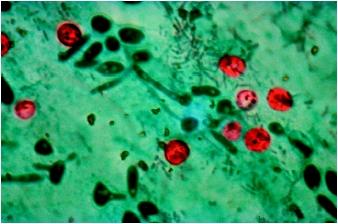
Cryptosporidium sp., an intracellular protozoan parasite. Using a modified cold Kinyoun acid-fast staining technique, and under an oil immersion lens the Cryptosporidium sp. oocysts, which are acid-fast stain red, and the yeast cells, which are not acid-fast stain green(picture1).
It exists in either the free-swimming (trophozoite) form or the oocyst (dormant) form. Cryptosporidium parvum is now recognized as a human pathogen which can cause severe diarrheal illness.
Big problem for immunocompromised patients (AIDS).

Tuesday, July 31, 2007

The Central Dogma Of Molecular Biology


I found these very simple and usefull slideshow for the central dogma.

http://www.slideshare.net/cgales/central-dogma-and-protein-synthesis/

Ataxia Telangiectasia


Ataxia Telangiectasia------>IgA deficiency

1.cereberal ataxia(narrow-based gate)
2.telangiectasia
3.risk of sinopulmonary infections
Defect in the DNA break repair gene ATM (Ataxia Telangiectasia Mutant).
IgA deficiency-infections of the upper and lower airways.

ATM gene encodes a kinase essential for p53 activity. ATM is inactivated in ataxia telangiectasia-->hypersensitivity to x-rays and predisposition to lymphomas.

amiNo aCids are linked NH2(shorter) to COOH(longer)

Wednesday, July 25, 2007

Petechiae and Ecchymoses

The former is petechiae-small size(pinpoint areas).
The latter is ecchymoses-bigger size.
http://www.netdoctor.co.uk/diseases/facts/purpura.htm

In few days after that post I had a question from the www.usmleworld.com question bank and according to them, the differences between petechiae, purpurae and ecchymoses are based on their size. For some reason I taught that both petechiae and ecchymoses are some kind of purpura, because of their color. Too busy to check that facts. May be later on, and also I trust usmleworld, these guys really rock.
Yes, I did quick check. That is right.
1.petechiae-less than 0.5 cm
2.purpurae-from 0.5 to 1 cm
3.ecchymoses-more than 1 cm
So, on the first picture there is a combination of petechiae and purpurae.

Bitot's spot


Vitamin A deficiency-->Bitot's spot
Some more pictures:
http://www.jceh.co.uk/extra/ts04_06.htm

Monday, July 23, 2007

Thiamine and Beriberi

Dry beri-beri-->Demyelization. Wet Beri-Beri (2B)-->Bi-ventricular failure

Monday, July 16, 2007

Perifollicular hemorrhage and Ring sideroblasts


Goljan the Great made this association between this two completely different findings, based on the form of a "ring". The only thing I can do is just put them into pictures.


A little bit more for the perifollicular hemorrhage: http://archderm.ama-assn.org/cgi/content/full/142/5/658

Saturday, July 14, 2007


To be honest I totally forgot about Telomerase and Retrotransposons. So, humans also have reverse transcriptases.


http://bcs.whfreeman.com/lodish5e/pages/bcs-main.asp?s=10000&n=00010&i=10010.03&v=chapter&o=00PRS&ns=0&uid=0&rau=0

DNA replication


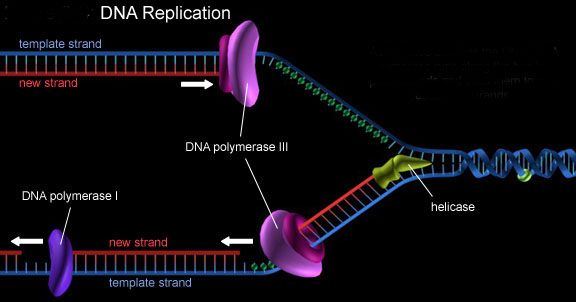
I know that when you read DNA replication is pretty clear, but the next animation will be very helpful, I guess.


MM:

1. dna A protein is the 1st one binding to DNA in the beginning of the replication
2. uRacil-->RNA
3. HELIX=SPIRAL-->Helicase is an enzyme that breaks the Hydrogen bonds, holding the double stranded Helical=Spiral DNA together. Nucleases break PDE bonds
4. DNA polymerase III starts form the 3’ exit of the RNA primer. Polymerization is always from the 3’ exit, but in 5'-->3’ direction

Wednesday, July 11, 2007

Pitting edema


Hypotonic fluid disorders: hyponatriemia; cells swelling
1.hypertonic lost-loop diuretics, Addison's
2.pure water gain-SIADH secretion
3.hypotonic salt gain-right sided heart failure, cirrhosis,nephrotic syndrom
This link explains very well the pathophysiology of the edema:

Wednesday, July 04, 2007

Hepatitis C

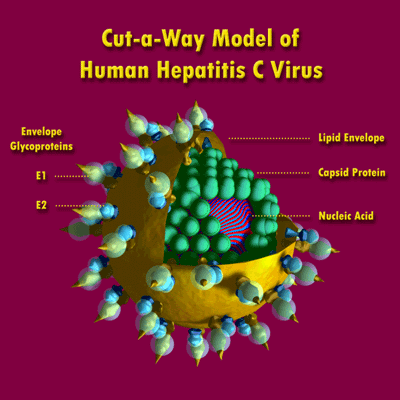
Very interesting video for Hepatitis C.

http://www.health-kiosk.ch/movie_hepa_cau.html

Thursday, June 14, 2007

Schistocytes aka aka aka


Red cell fragmentation
aka/or
Schistocytes
aka/or
Schizocytes
aka/or
Helmet cells


Schistocytes are fragmented red blood cells, and indicate mechanical damage causing hemolysis. The commonest cause is probably the presence of a mechanical heart valve, particularly when dysfunctional. Hemolytic Uremic Syndrome, Thrombotic Thrombocytopenic Purpura, and Disseminated Intravascular Coagulation are other causes.

Wednesday, June 13, 2007

Intestinal rotation

This the best animation can possibly find.

Remember: abnormal rotation results in intestinal malrotation with sypmtoms of obstruction and volvulus(intestinal ischemia due to twisting). Cecum is found in the right upper quadrant, fixed to the second portion of the duodenum.

Tuesday, June 12, 2007

ELISA test

ELISA seems very easy, but usually students make mistakes on the exam. This animation shows the test step by step. There are direct and indirect ELISA. Tip to remember. In direct both antibodies bind directly to the antigen.

http://www.sumanasinc.com/webcontent/anisamples/molecularbiology/ELISA.html

Thursday, June 07, 2007

Stomach


This is a very nice picture showing the regions and layers of the stomach.
Erosions, by definition, don't penetrate the muscularis mucosa.